Quick answer
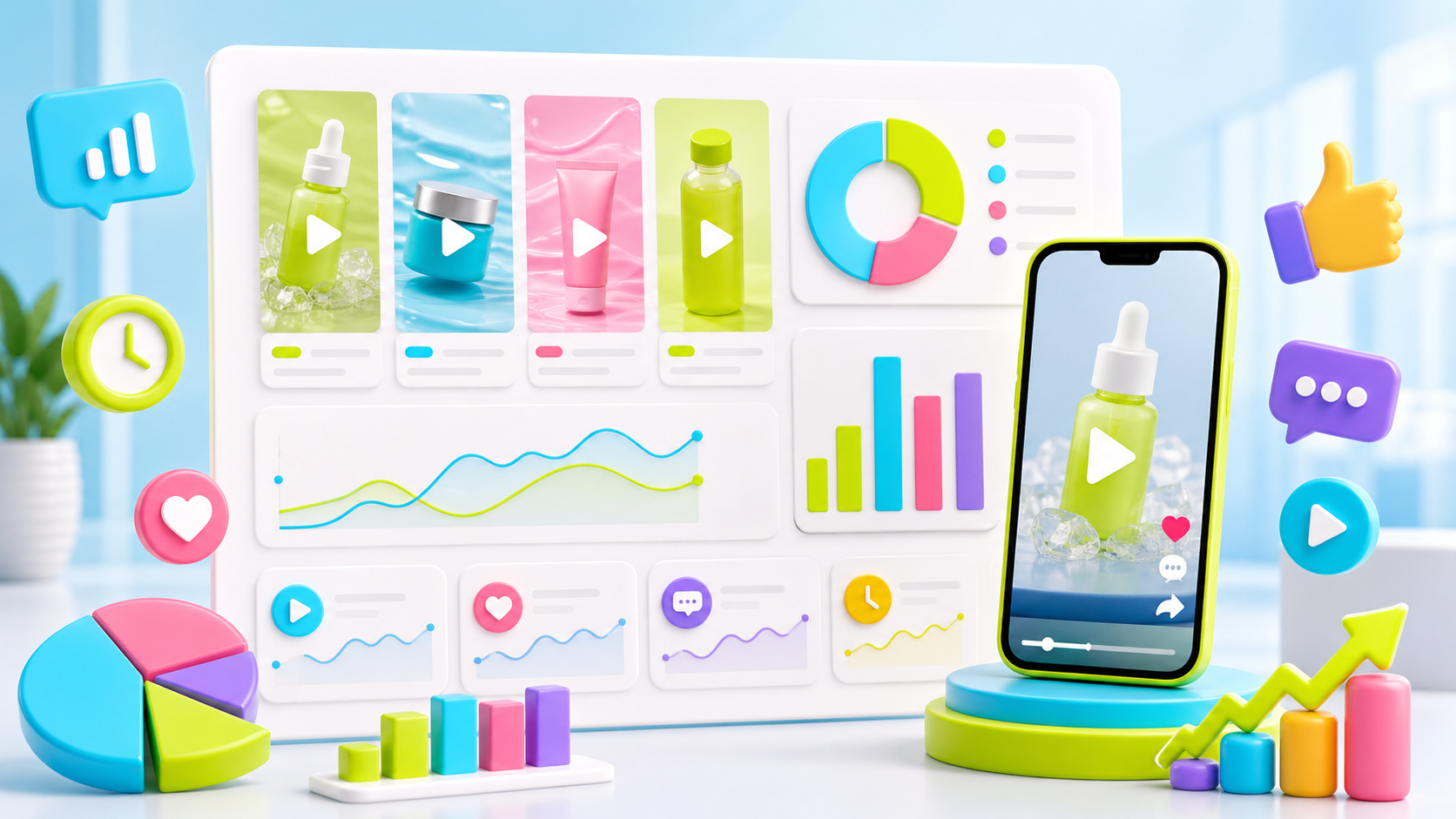
Track AI video ad performance by separating hook metrics, engagement metrics and conversion metrics. Watch early retention for the hook, CTR for message relevance and CPA or ROAS for business impact.
Generating more AI video ads is useful only if you learn from them. The right metrics show whether the hook, product proof and CTA are doing their jobs.
Separate Creative Metrics
Do not judge every AI video ad only by sales. First separate the creative system: hook, hold, click and convert. Each metric points to a different problem in the video.
Measure The Hook
If viewers leave in the first second, the opening visual or line is too weak. Test a stronger product reveal, creator reaction, problem statement or visual contrast before rewriting the full ad.
Measure Product Proof
If people watch but do not click, the video may be entertaining without making the product valuable. Add clearer proof: close-up detail, before-after, benefit demonstration, review angle or stronger final CTA.
Create A Learning Log
Track hook type, product angle, format, length, CTA and result. Over time, your best AI video prompts become a reusable creative library instead of isolated experiments.
- Hook type
- Product proof used
- Video length and format
- CTA
- Best metric and weakest metric
FAQ
What metrics matter for AI video ads?
Important metrics include early retention, watch time, CTR, conversion rate, CPA, ROAS, saves, shares and qualitative creative learnings.
How do I improve a weak AI video ad?
Identify whether the weak point is the hook, product proof or CTA, then generate a focused variant instead of changing everything.
Create testable AI video variants
Use LOVIX AI to generate hook and proof variants you can compare across social ad metrics.
Sign up for LOVIX AI